
Follow-up visit: three edge banders at Guoyan New Materials
Our after-sales team returned to Huadu, Guangzhou, in November to check three edge banders running at Guoyan New Materials: a handle-free soft-forming bander, a skeleton-line bander and a multi-profile bander. The visit was a condition check and a process review, not a sales call.
Three machines, three separate jobs
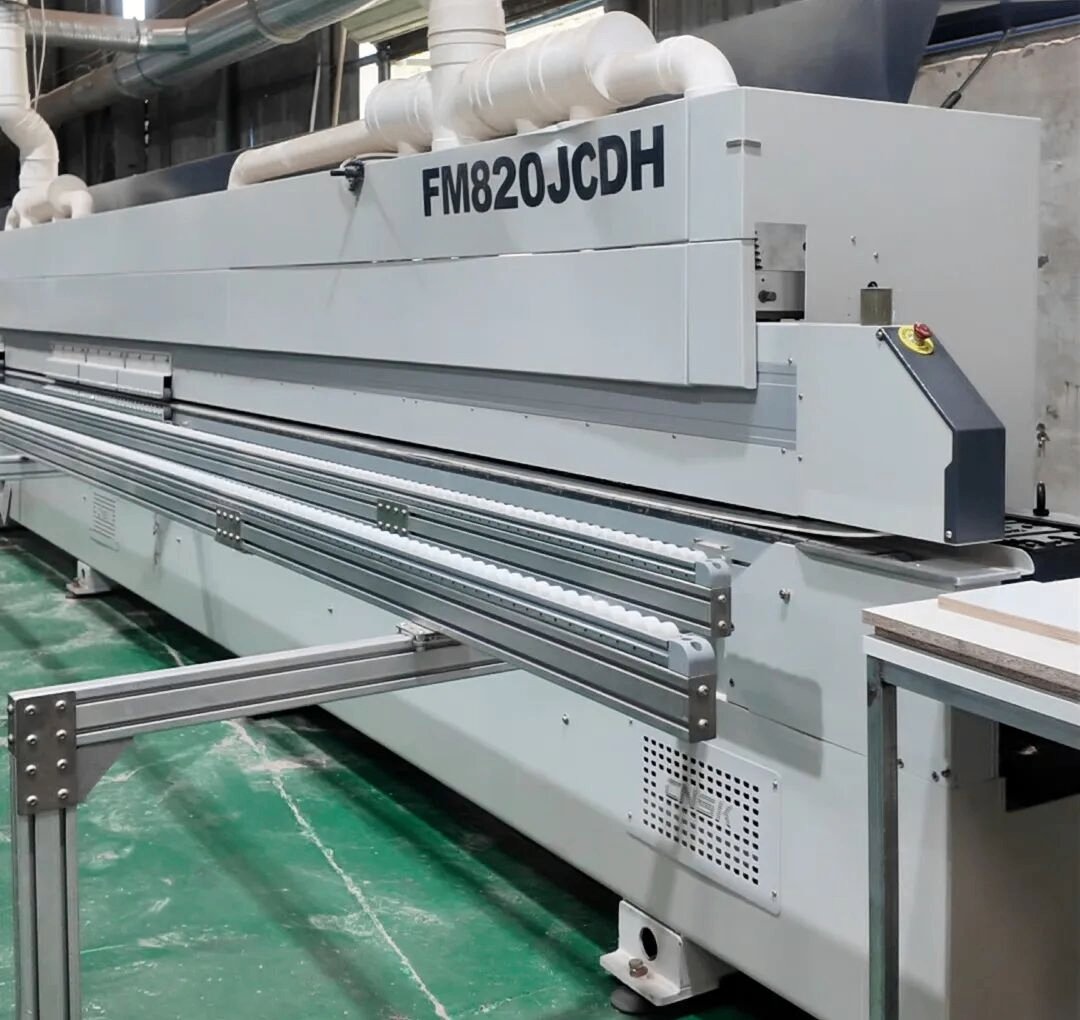
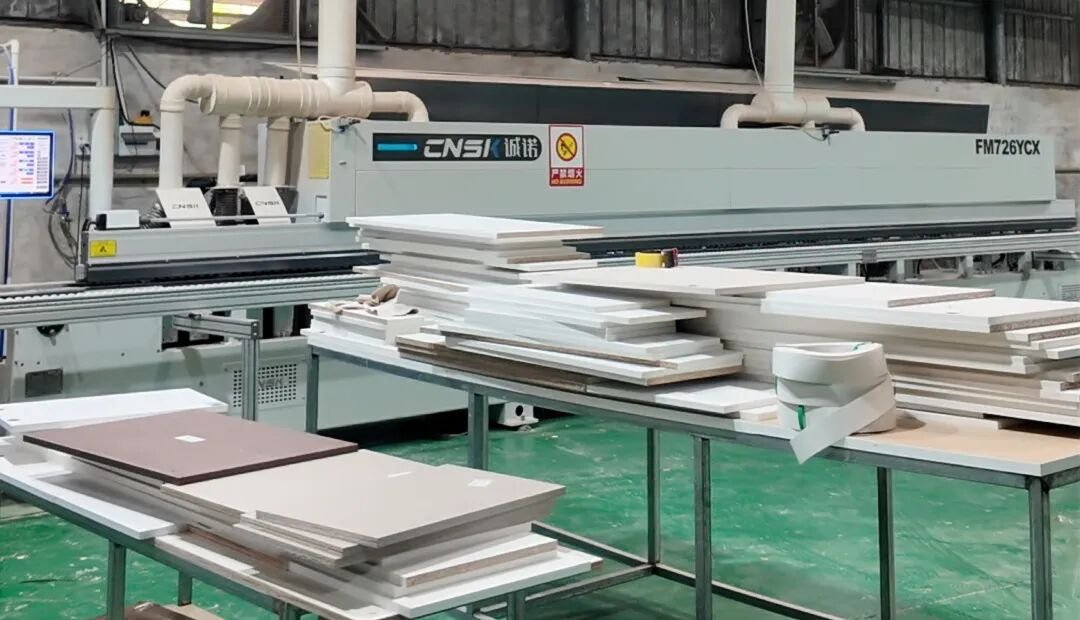
A floor running three banders is not a sign of spare capacity. At Guoyan the work is split by profile: the FM758JCS Ultra takes handle-free grooves, the FM820JCDH takes skeleton lines and grille strips, and the FM726YCX takes arcs, bevels and duck-bill edges.
The split matters because each type of work fails in a different place. Groove banding fails at the groove mouth, skeleton lines fail on the face the band is pressed onto, and shaped work fails at the joint between two angles. Keeping them on separate machines lets each one hold its own settings instead of being re-tuned between orders.
Handle-free: the labour sits in the groove
A handle-free door looks like it lost a component. In production it gained a step: the groove has to be banded inside, and the band has to meet the flat face without a step.
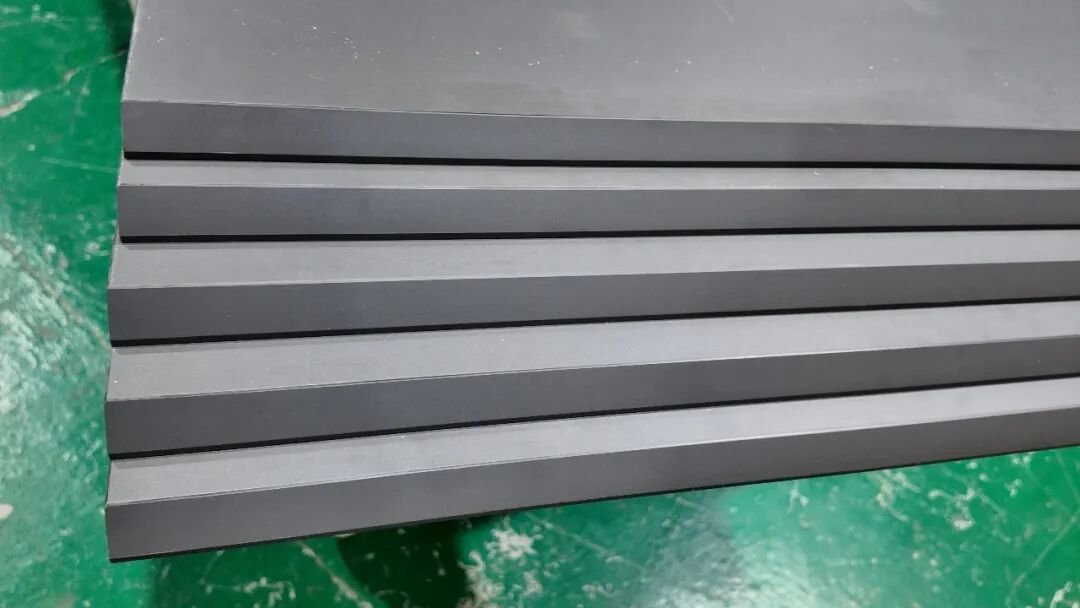
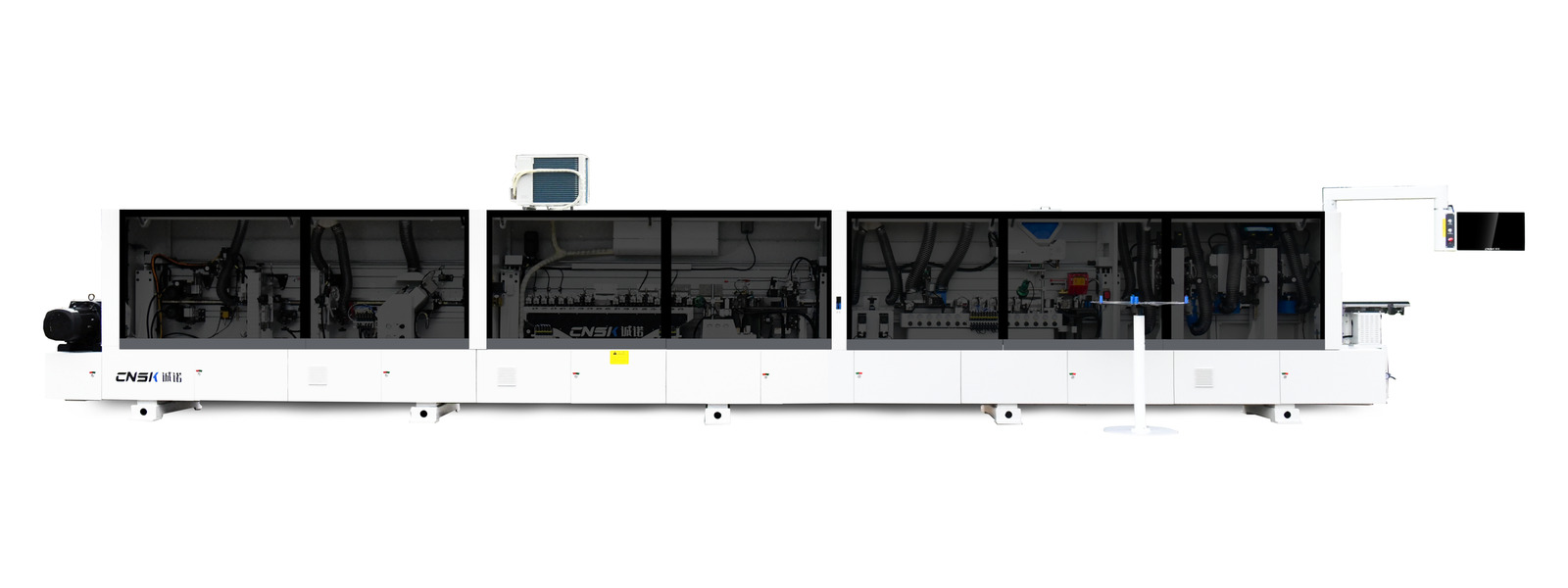
The FM758JCS Ultra runs the two layers in one pass. The first layer bands only the inside of the groove; the second covers the groove mouth and the flat face together. Because the groove is banded in the same pass, no second trimming step is needed inside it — the part of the job that normally sits with a hand tool.
Thirty handle-free profiles switch by recipe. Two-colour non-cleaning PUR is fed from three glue pots — panel, band and groove separately — and a servo-controlled back fence positions the panel to micron level, which is what keeps the left and right of a handle-free door symmetrical.
For the plant, this shows up as less hand work on every door, a steadier yield between shifts, and a changeover measured in a recipe rather than in cutter re-setting.
Skeleton lines: from possible to repeatable
A skeleton door is not hard to make once. It is hard to make the same way across a whole order.
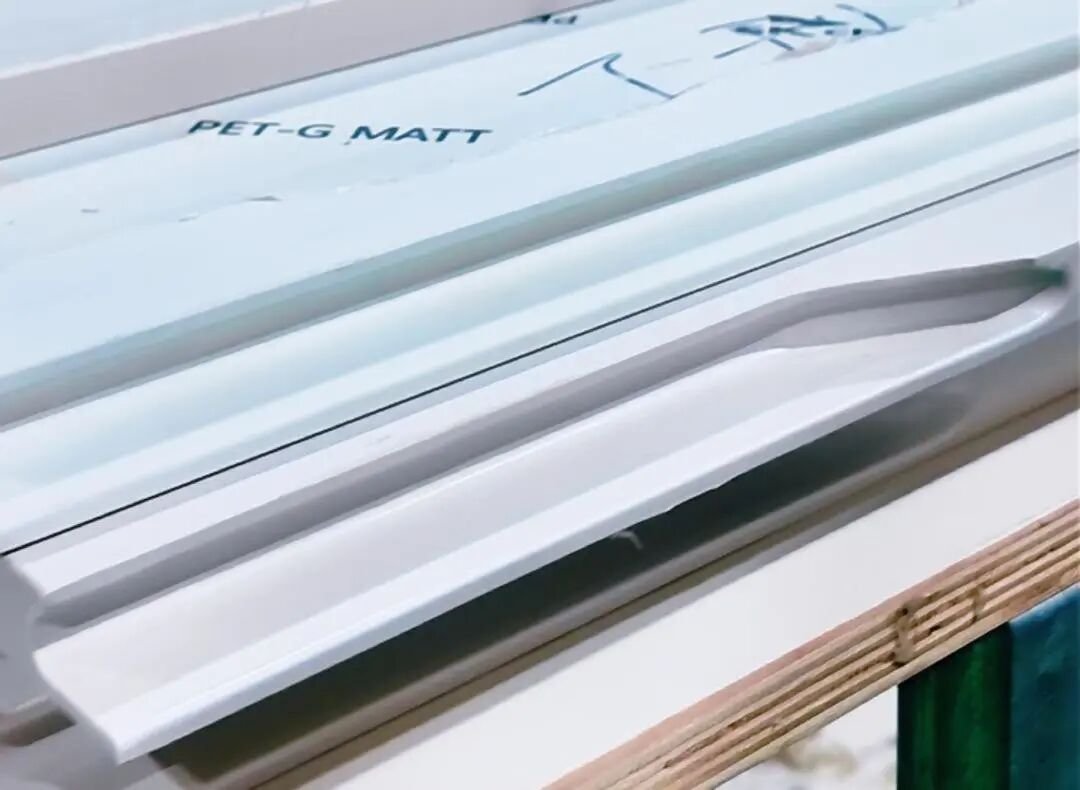
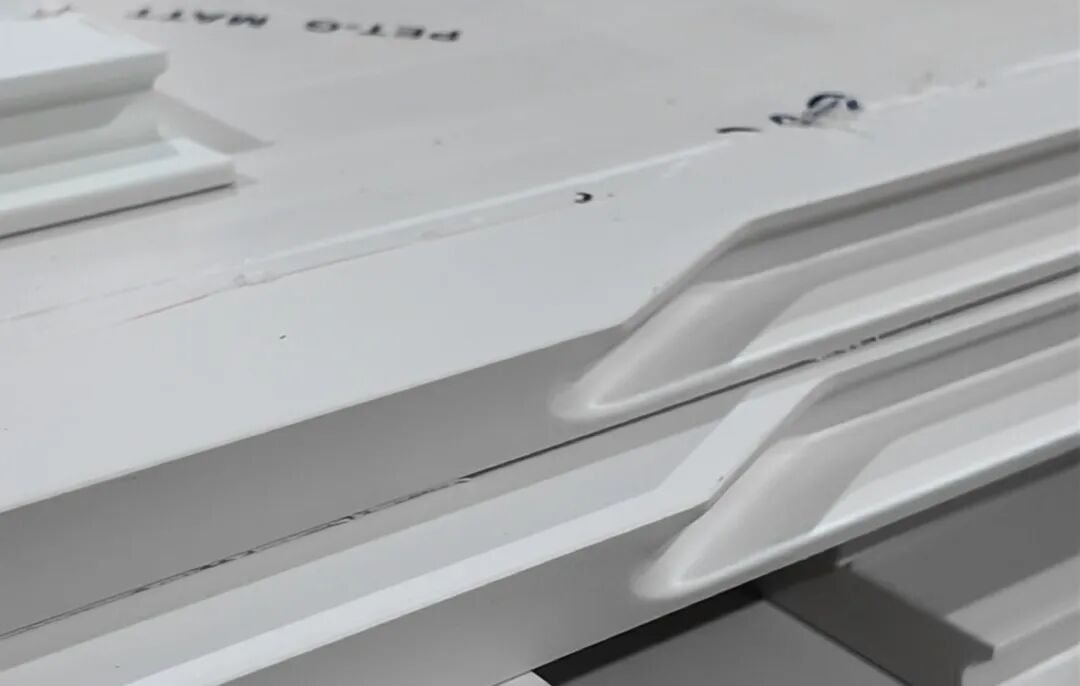
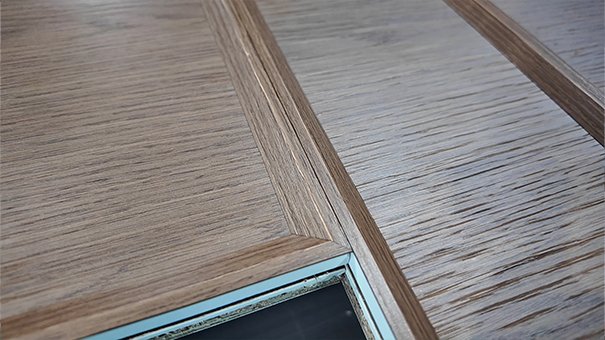
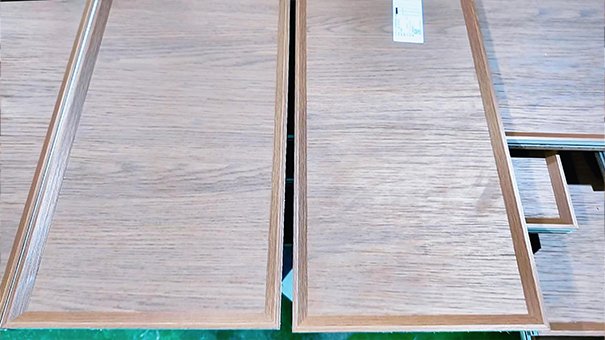
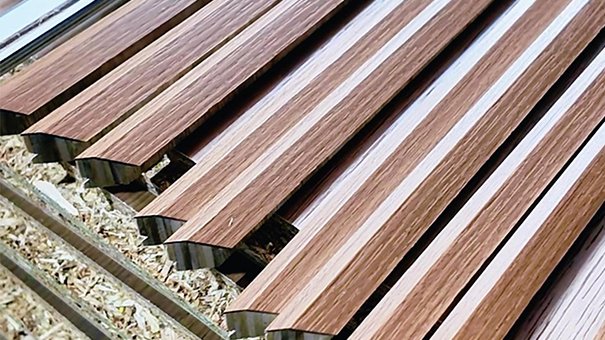
The failure point is the face the band sits on. Cutting and grooving leave ripple marks, burrs and a slight vertical deviation, and a band pressed onto that face reads as a soft joint that whitens with time. The FM820JCDH runs a pre-milling saw and cutter at the infeed, then a twin-blade skeleton-line pre-milling unit that cuts the edge a second time before the band arrives.
Forming is handled by two units: a profiling saw for the skeleton bevel, and a 45° saw that mills a straight edge into a 45° bevel in one pass, with its own PUR bevel gluing station.
The panel travels on a crawler feed at 16–23 m/min. A wide contact face spreads the pressure evenly, so long stock and thin panels do not drift or take press marks on the way through — the failure that otherwise shows up later as a wavy band line.
Arcs and bevels: the edge of the order book
Arc cabinets, hidden doors and shaped wall panels are low volume and high value, and they are often how a buyer judges whether a plant can take the job at all.
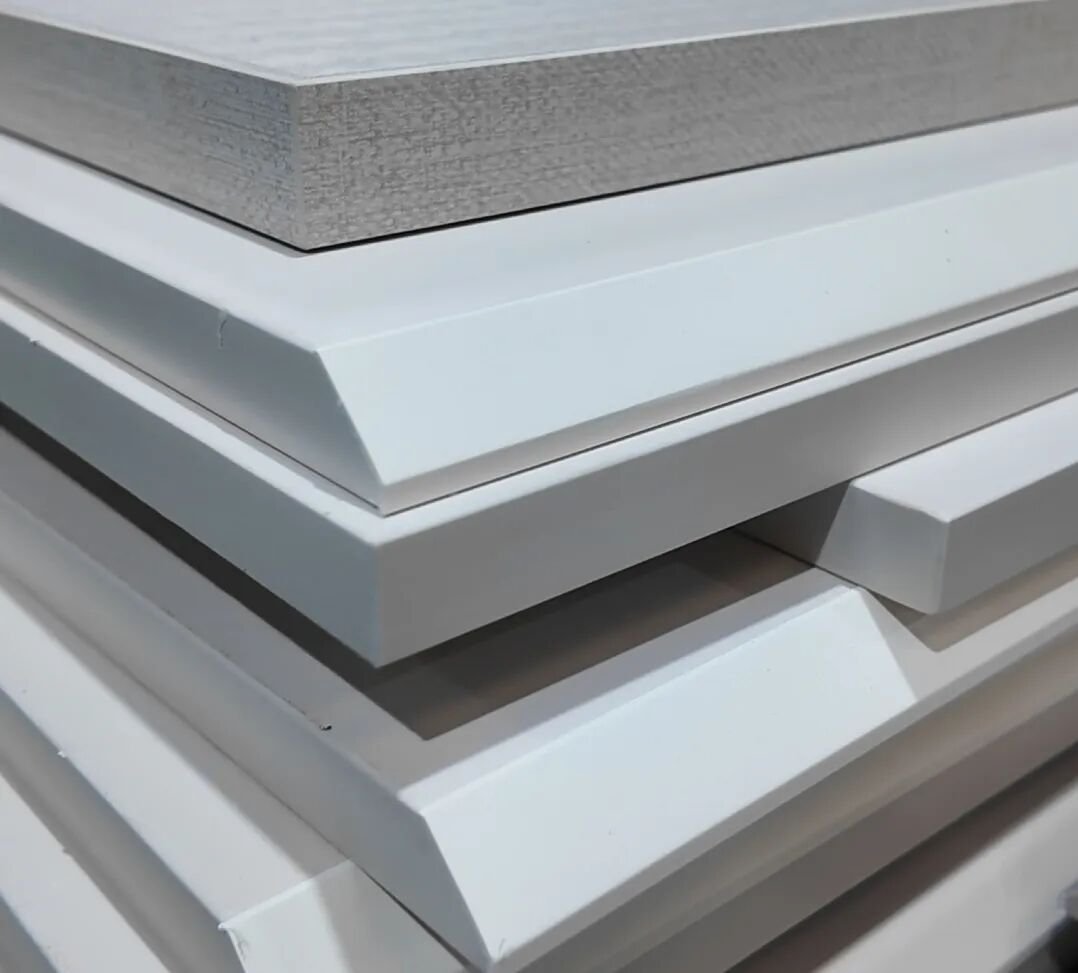
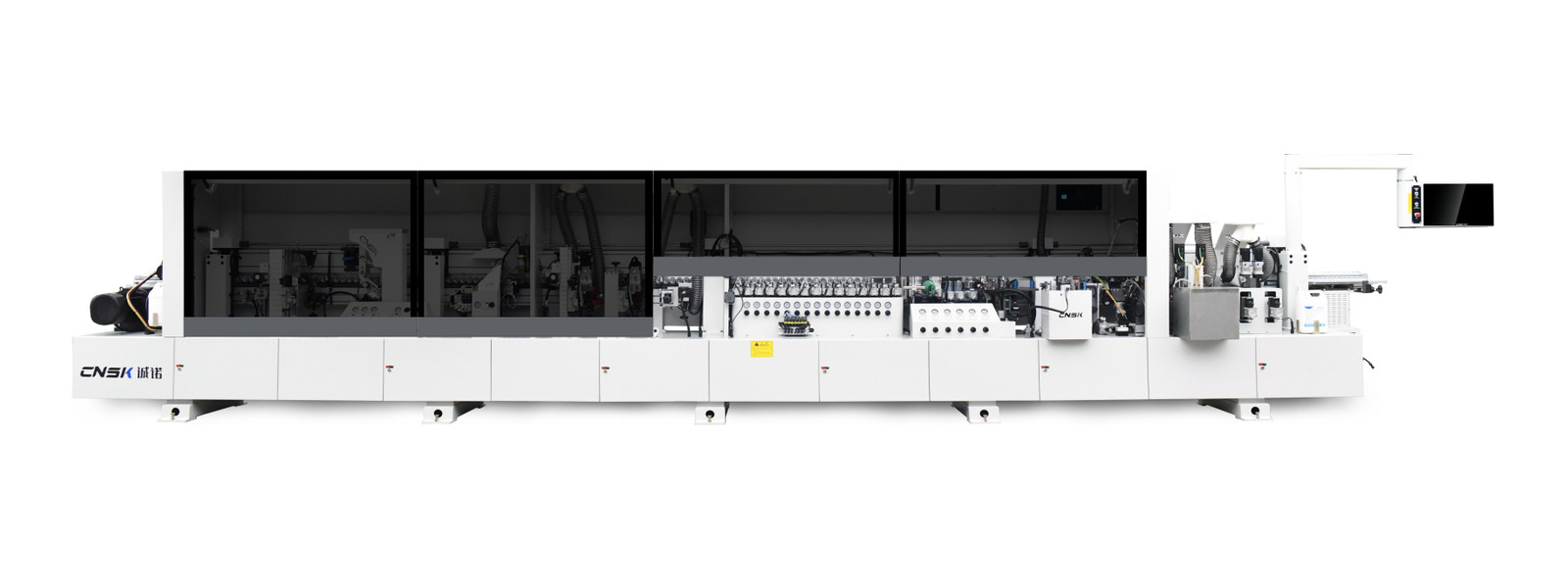
The FM726YCX covers five profiles: 45° full bevel, 45° bevel and straight, half arc, quarter arc and duck bill. Two sets of full-servo milling cutters position and change tools automatically, a 9 kW spindle does the milling, and the 45° full-bevel station has its own gluing and pressing unit so the bevel is bonded independently of the straight face.
During the visit the team re-checked servo milling accuracy and the profile chamfer — the two settings that decide whether a shaped edge closes cleanly.
Why three machines instead of one
One machine can be configured to do all of this. What it cannot do is do it at the same time.
Changeover between these jobs is not a button. Cutters are re-set, the glue system is switched, and the feed has to be re-tensioned for a different panel. On a combined line that runs half an hour to an hour per switch, and the previous settings have to be restored by hand and by note.
Split across three machines the arrangement is simpler: volume work runs on the crawler machine at a steady speed, small batches with many profiles run on the handle-free machine where changeover is a recipe, and the slow, high-value shaped work runs on the multi-profile machine without holding up the volume line.
Each machine keeps its own parameters, so a batch run in November matches the same profile run in October. That consistency is worth more to a downstream furniture maker than a higher top speed on paper.
What the market is asking for
Five changes in whole-house fitting arrive at the edge bander sooner or later.
Doors, wall panels and cabinets are now specified as one system: the same process and the same colour across all three, which makes the appearance of the edge a line item at handover rather than a detail.
Handle-free has moved from premium to standard. The design is cleaner and easier to clean, but groove banding asks more of the machine than a straight edge does, and hand trimming cannot carry that cost for long.
Shaped products — skeleton doors, grille doors, arc cabinets — are growing. They are not about volume, they are about recognition, and they need profile capability.
Panels have changed too. Multi-layer board, PET and film-pressed faces are more common, and adhesive compatibility matters more than it did, which is why PUR has moved from optional to normal.
Orders themselves are smaller and more varied. Speed at the top end matters less than speed of changeover.
Read against those five, the three machines are less about capacity than about which orders the plant can accept. Straight cabinet edges are the base load, and handle-free, skeleton and shaped work is where the margin sits. Guoyan keeps the base load on efficiency and the margin on process range, with delivery kept inside its own building instead of subcontracted out.
On the floor
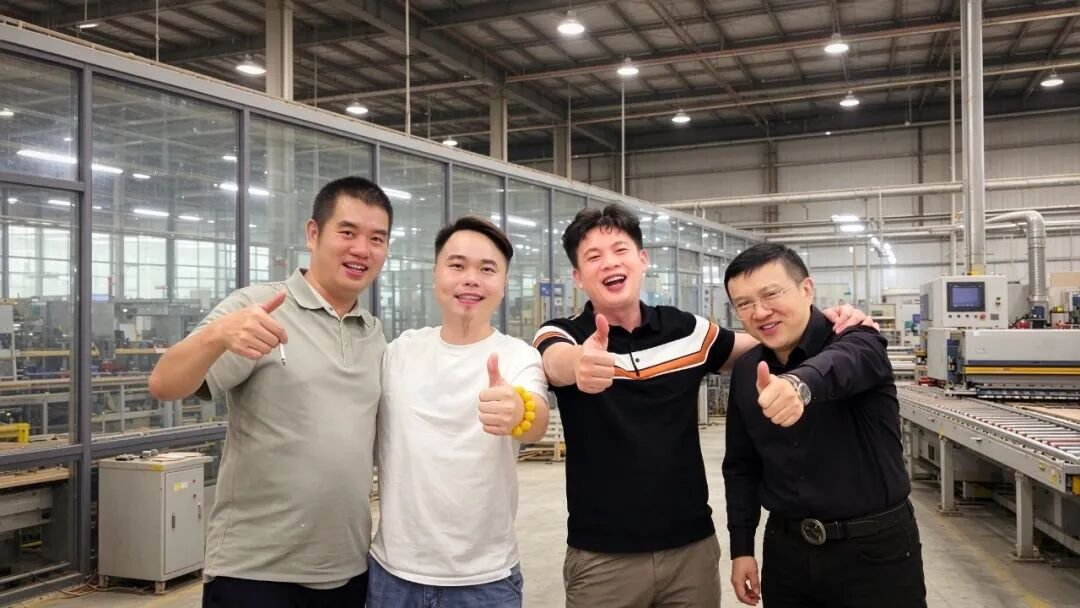
The team checked the running condition of each line and went through the settings with the operators.
Guoyan processes and supplies panels to furniture makers downstream, so its own delivery promise depends on keeping the three lines running without gaps.
For CNSK a delivery is not the end of the job. Machine condition, room for process upgrades and the problems operators hit day to day are only visible on the line. Walking the three lines with the people who run them is how those points surface, and it is what the visit is for.
The machine in this report
Double-Layer Handle-Free Edge Bander
Thirty handle-free profiles on one machine, switched from the screen with no waiting between shapes.
Five-Profile Arc and Bevel Edge Bander, PUR
The five-profile bed of the FM725YCX with a two-colour PUR pot, for panels where EVA will not hold or the joint has to stay invisible.
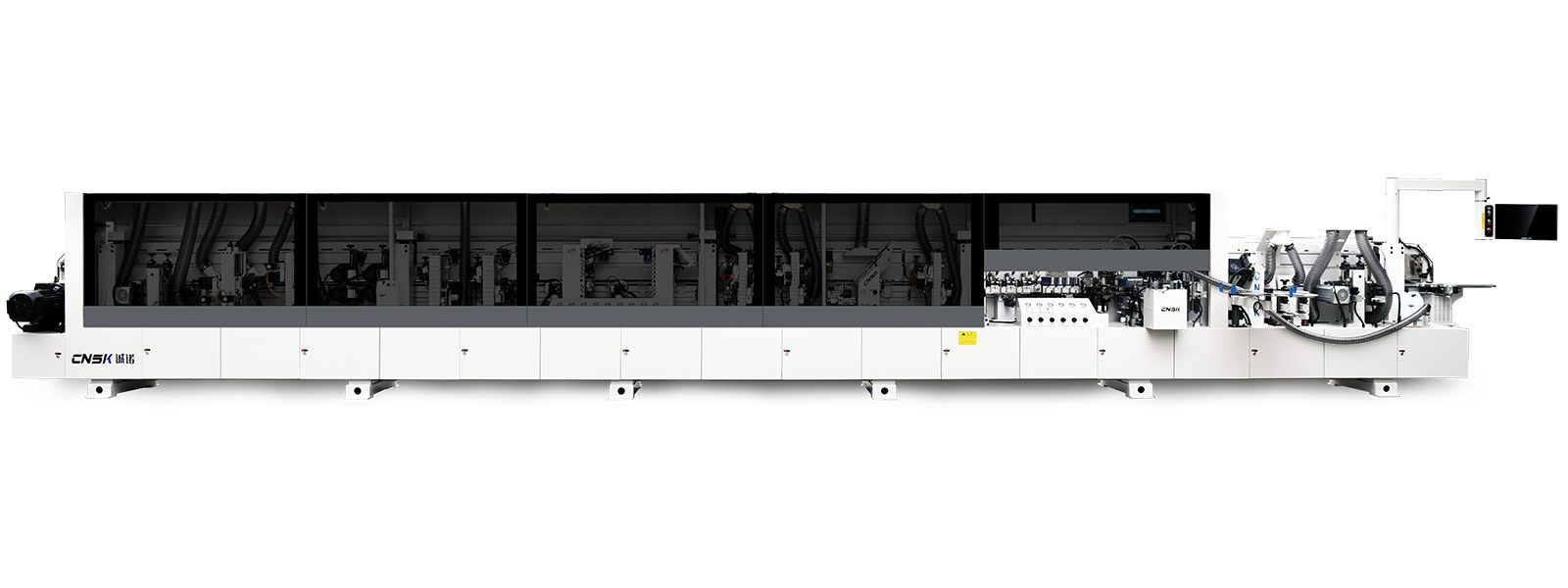
Skeleton-Line Grille Edge Bander
Skeleton-line doors, grille slats and standard straight edge banding on one track-fed 13-metre bed.
Send the panel spec. Get a configuration, not a catalogue.
Thickness, width, band material and the profile you sell. That is enough to put a station list and a price against your name.